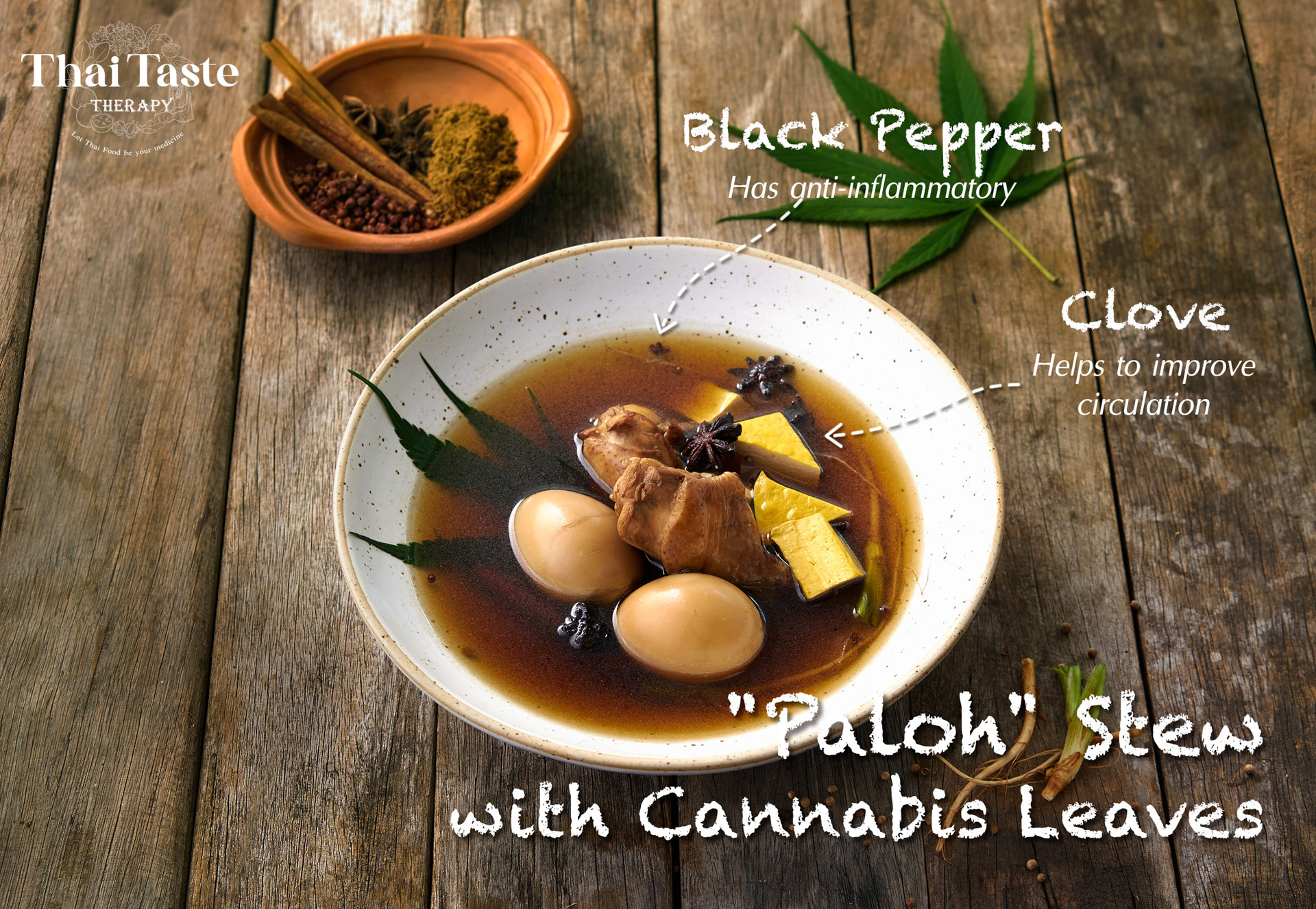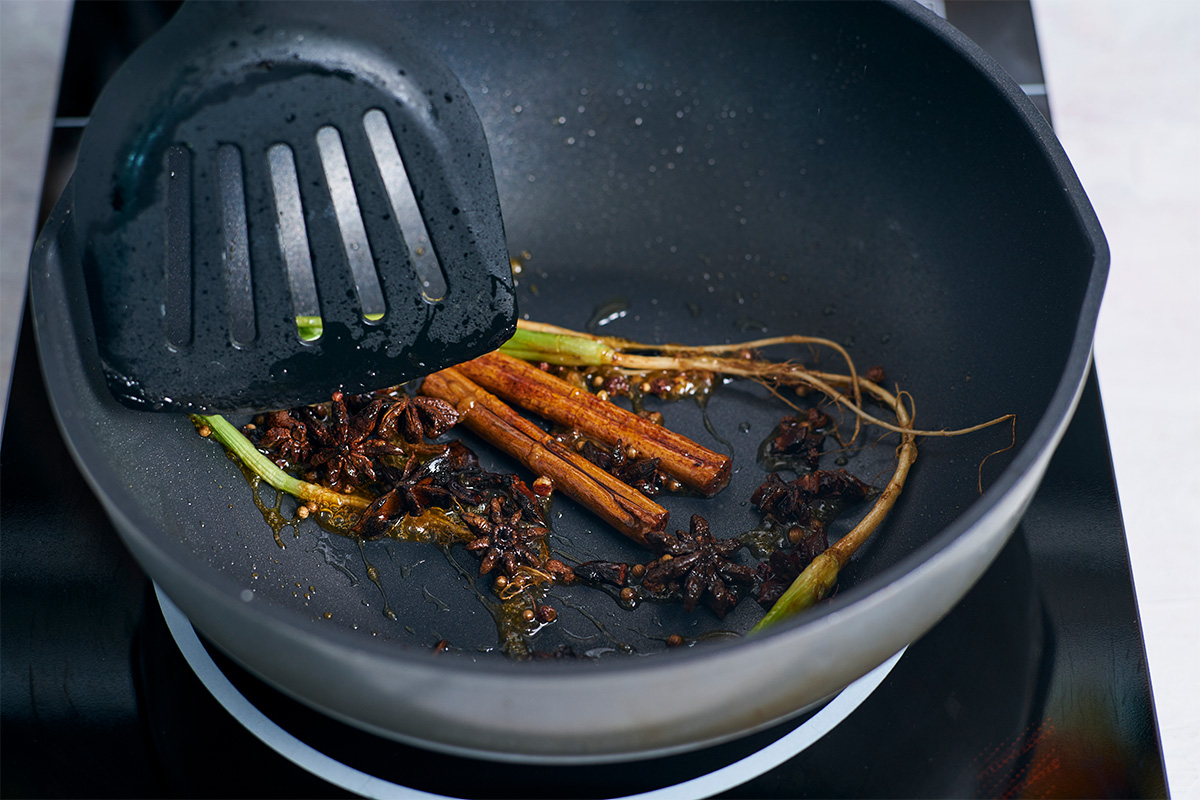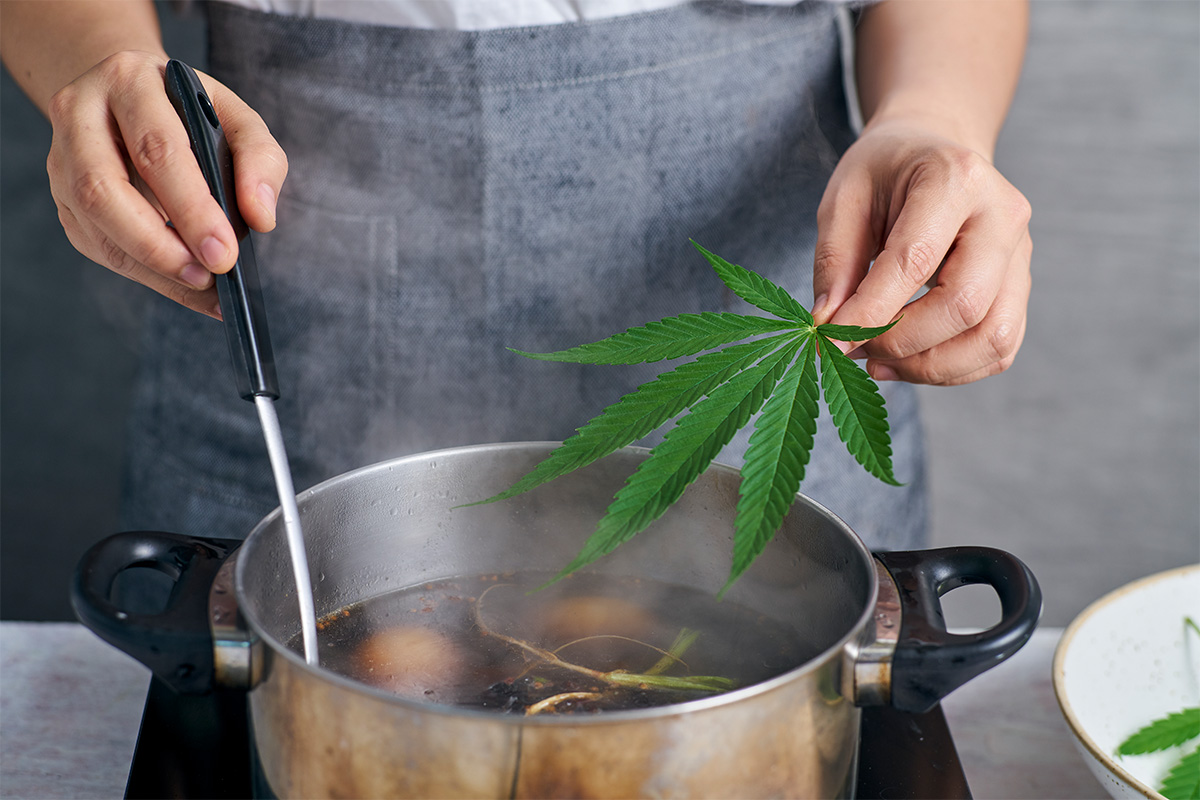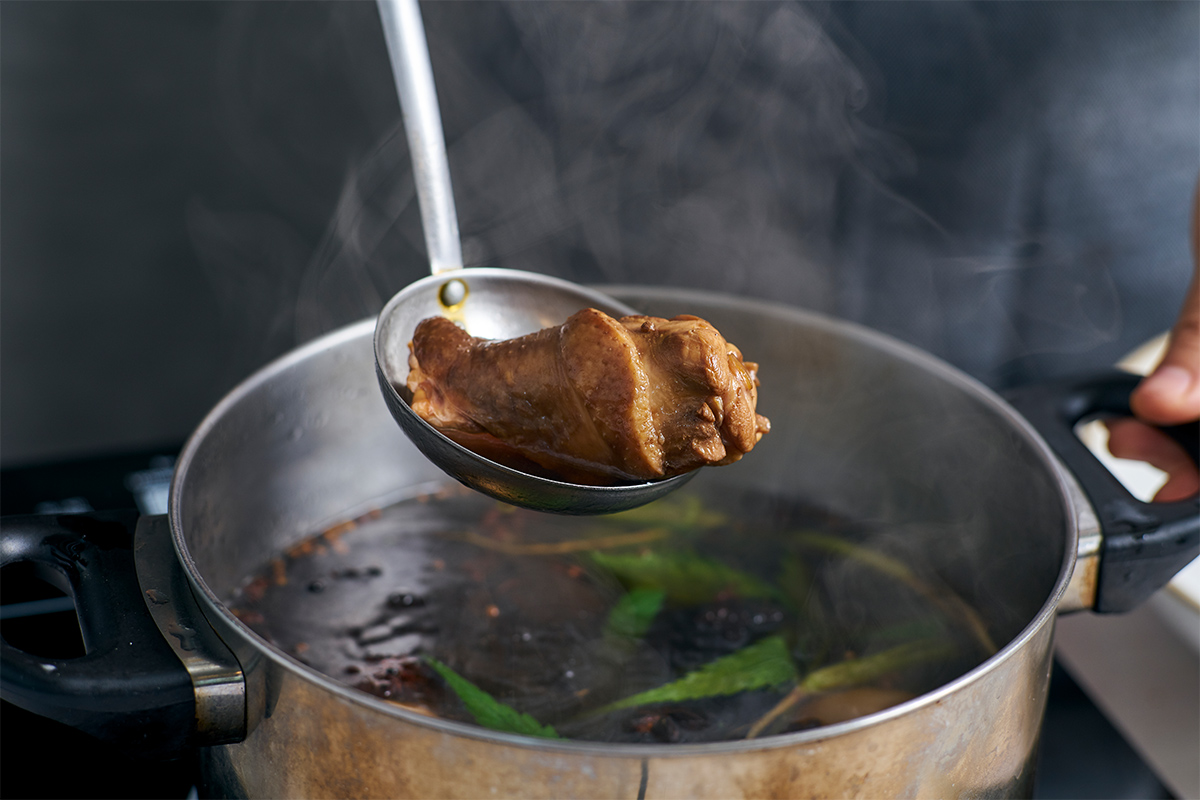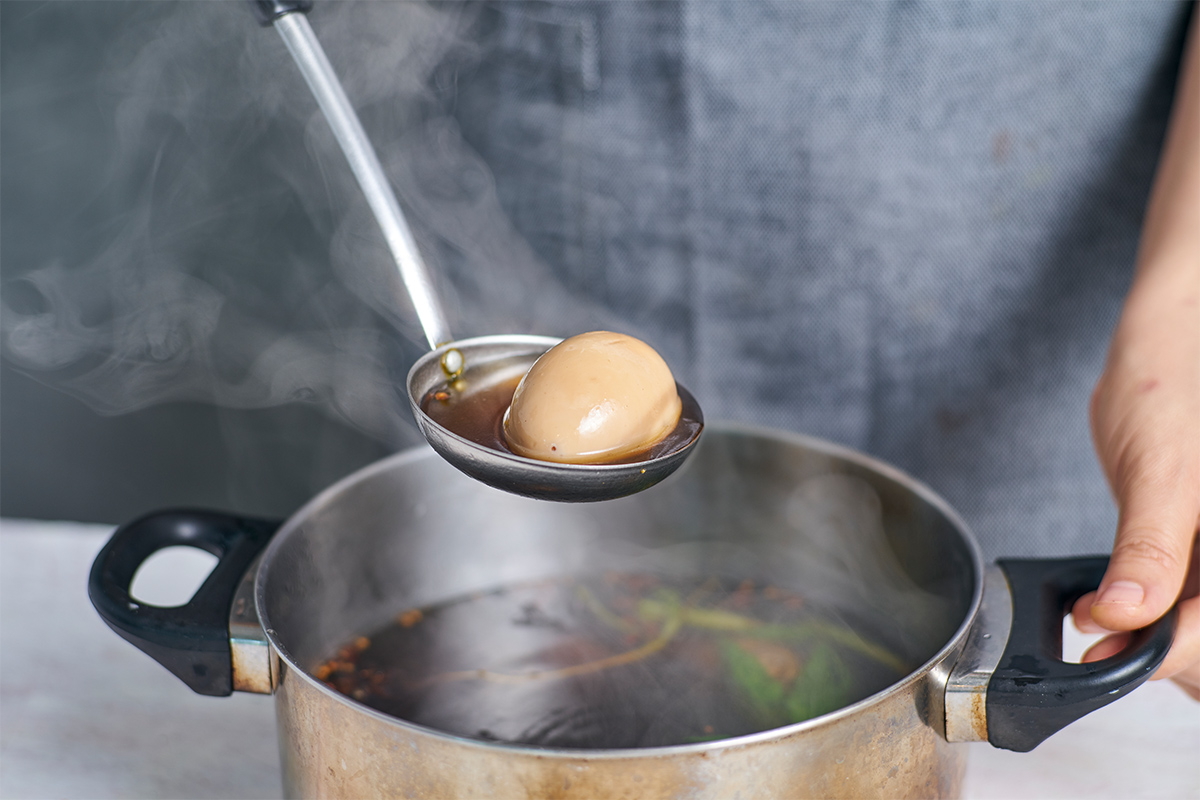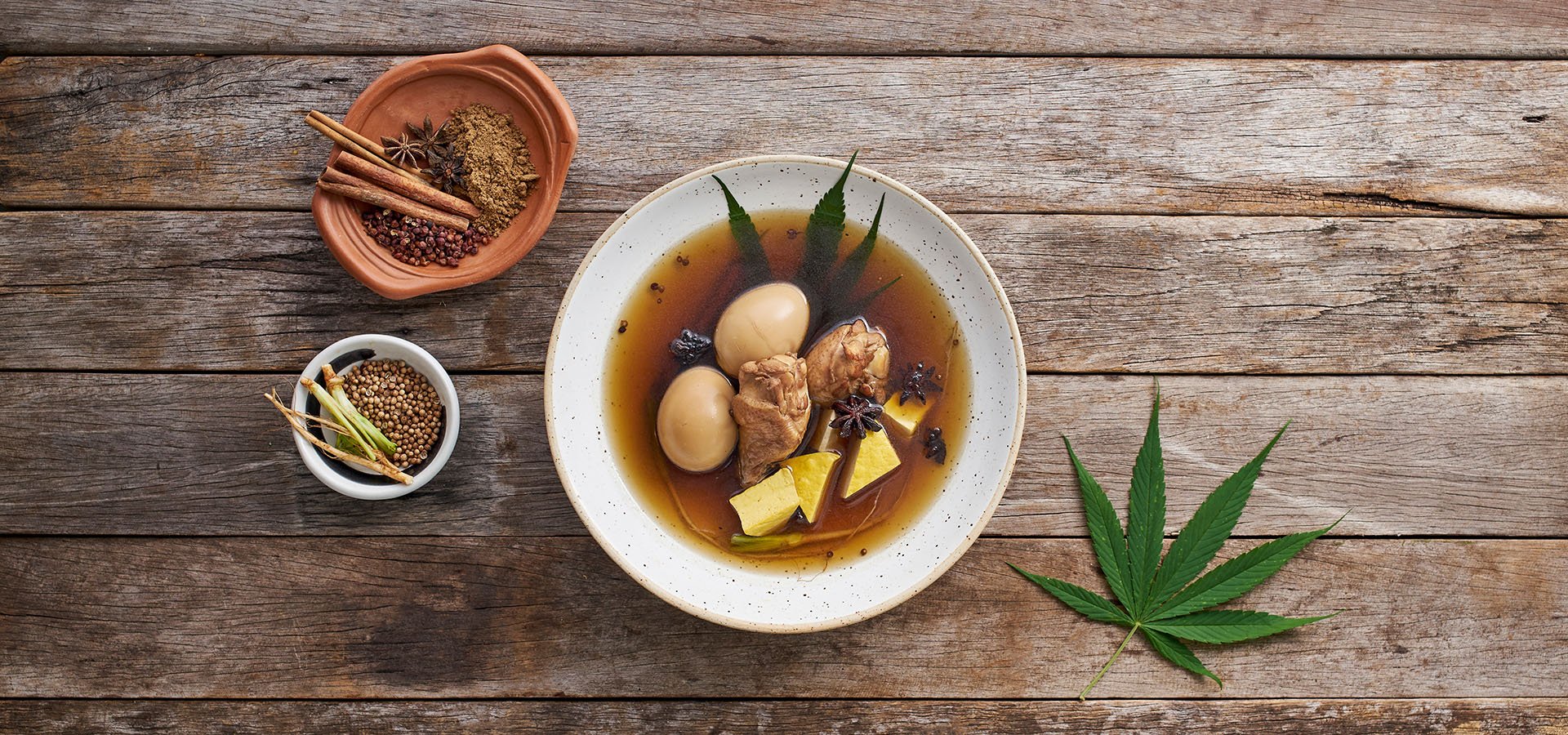
The word ‘Paloh’ in Chinese means something like ‘mixing everything together’, which may sound similar to ‘Jab Chai’ or the Chinese mixed vegetable soup commonly seen in Thailand. However, the difference is that ‘Paloh’ includes star anise, cinnamon, and sweet soy sauce. There are many regional versions of Paloh to be found in China, but the version of the dish found in Thailand is based on the Teochew version which emphasizes the scent of Chinese spices. It has a sweet and salty taste which combines perfectly with the fatty pork belly, although those who are not a fan of oily food can select a leaner cut of meat if they desire. A lot of the original spices have been done away with but like cinnamon, cloves, star anise, coriander root, onion, garlic, and cardamom remain part of the flavorsome broth today.
A legend says that the original recipe was born from an act of vengeance from Godfather Pai Shui Ye, after he caught his wife having an extra-marital affair. He cursed both his adulterous wife and her lover and turned them into ducks. The ducks were then boiled, and sweet soy sauce and various spices were added until they became what we now know as ‘Paloh’. From then on, anyone who visited the temple or came to ask for blessing from Pai Shui Ye, had to come with an offering of the duck soup. The dish lived on through the generations, but people became bored of duck and used pork, tofu, and eggs for a more varied and appetizing dish.