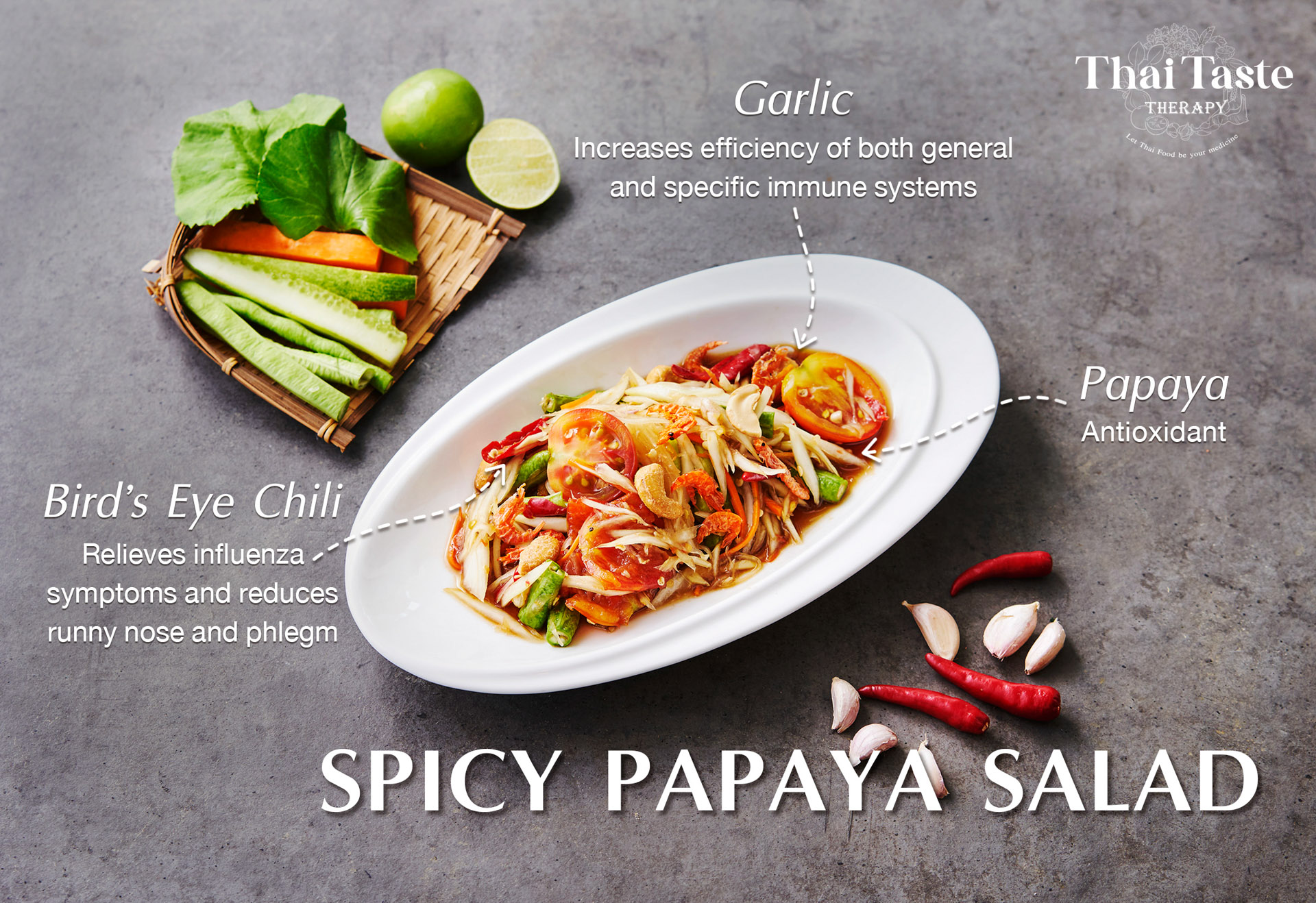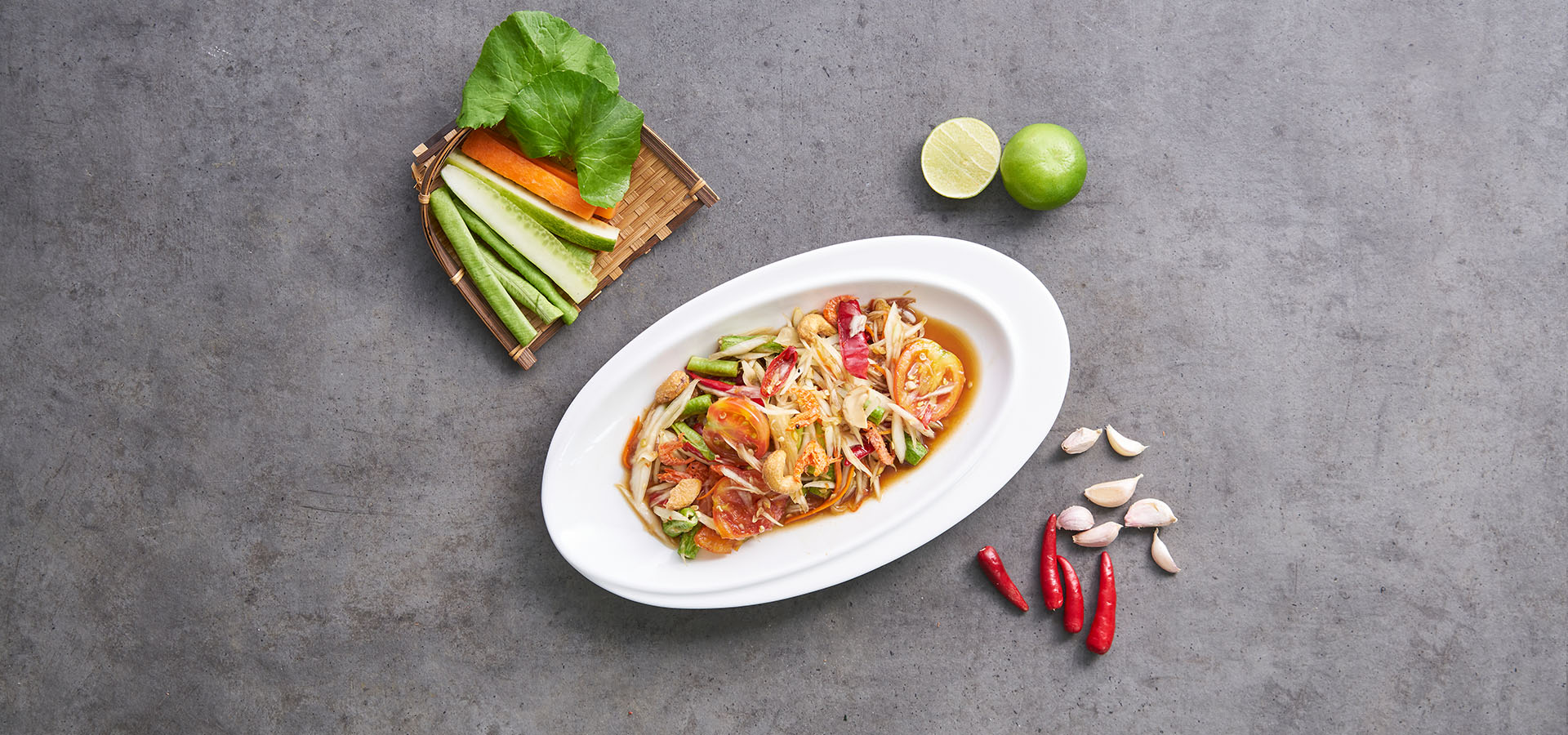
This is no clear evidence that indicates when raw papaya was first used as the basis of this dish, but we can trace the history of papaya planting in Thailand. The plant originated in Central America and was brought to Southeast Asia by exploring Spaniards and Portuguese during the Ayutthaya period. The Dutch later brought chilis to Thailand during the reign of King Narai the Great and a French ambassador who visited Ayutthaya remarked that papaya was already growing so well that it had become a native plant of Siam as well as mentioning that it could be pointed with ingredients like garlic, lime, mango, dried shrimp, pickled fish, crispy fish, banana, sugar, cucumber, chili, and various nuts to make a spicy, raw salad.
As for the old cookbooks, ‘Tum Rab Yaowapa’ from Her Royal Highness Princess Maha Chakri Sirindhorn Prince Yaowapapongsanit, describes a food called ‘Papaya Salad with Oily Rice’ with the main ingredients being rice cooked in coconut milk. The recipe also contained ingredients like dried shrimp and peanuts, which are still seen in the central Thai version of the dish today, although it was clearly considerably milder than the standard northeastern or ‘E-Sarn’ version.
Papaya salad in the Laotion language is referred to as Tam Mak Hung or Tam Bak Hung (Mak Hung meaning papaya) or alternatively, Tum Som, ‘Tum’ meaning to pound and ‘Som’ meaning sour and the Thai ‘Som Tum’ is believed to be a reconfiguration of this.