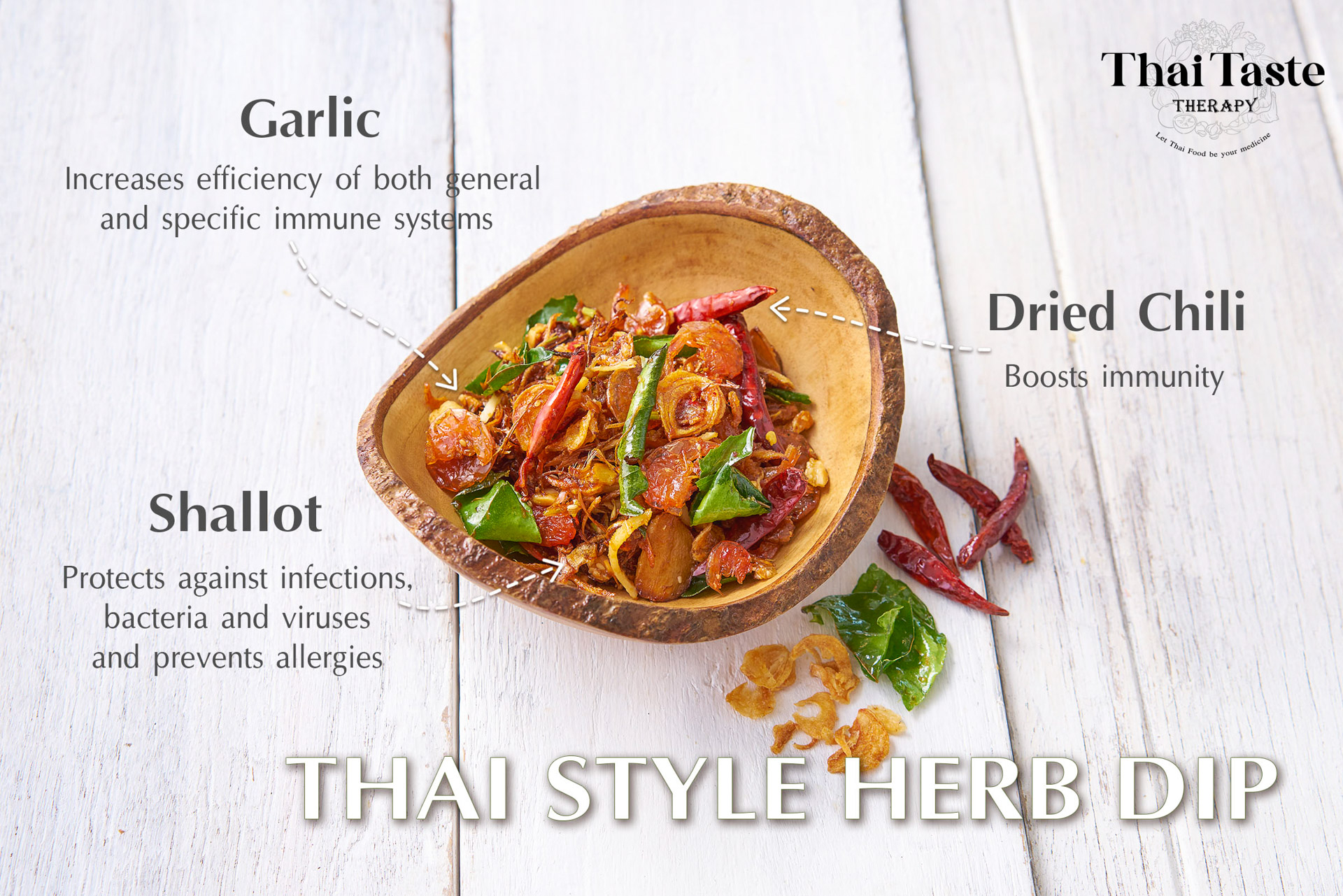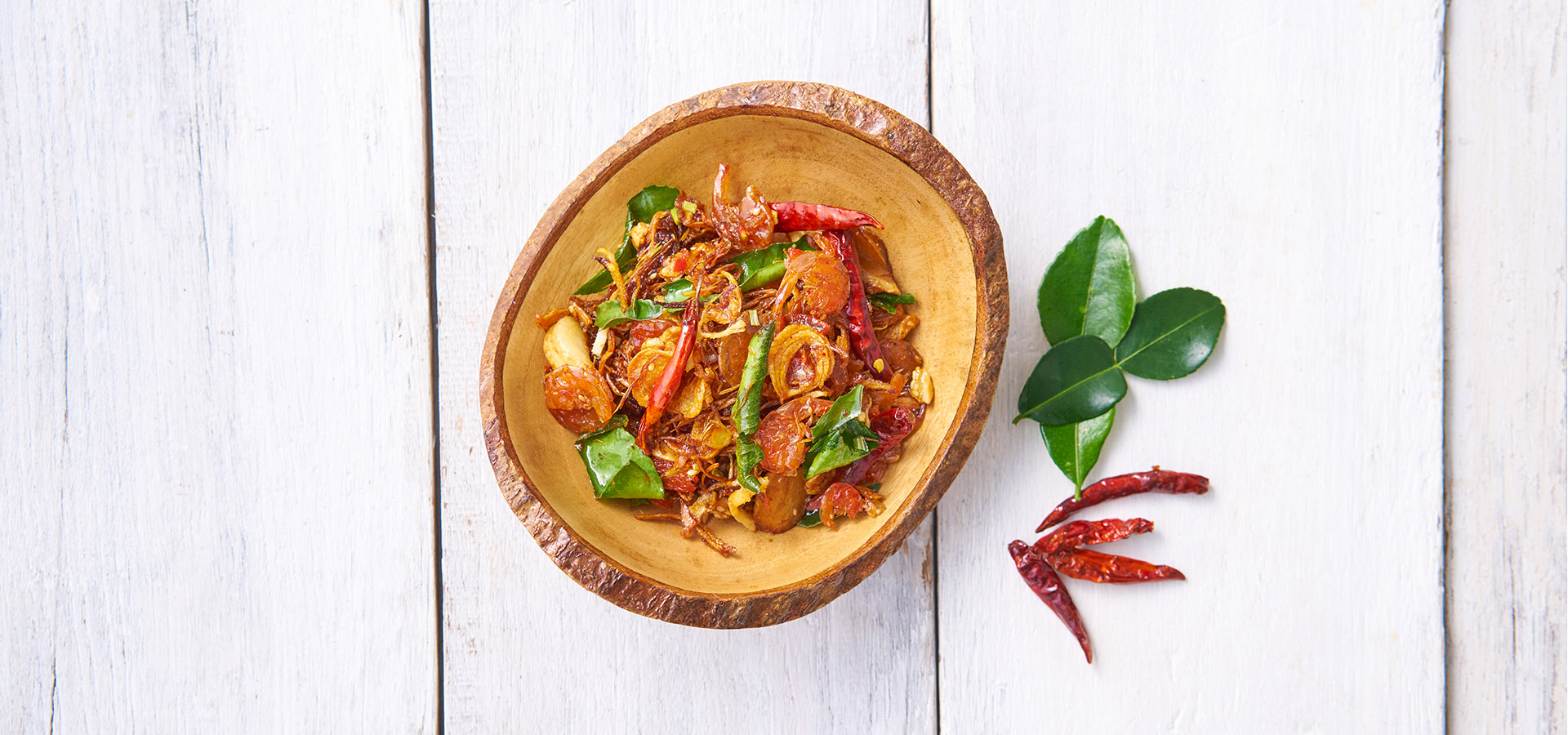
Chili Dip or Nam Prik is believed to have been around since the Ayutthaya period. The word ‘Nam Prik’ originated from a cooking method using herbs, chili, garlic, onions, and strong-smelling spices, mixed with local vegetables and pounded with shrimp, fish or other meats depending on local availability and personal preference.
In the past, people preferred to eat seafood rather than wild or farmed animals because they were easy to find and catch along the canal, and more convenient that farming or hunting. It is assumed that this dip was invented to combat the fishy smell of seafood and add flavor and spice to their meals. The names of the various types of chili dip are often referred to by their main ingredients or by the type of chili used as a base.
Culinary surveys of the country have revealed that there were previously over 500 types of chili paste and dips in Thailand but there are currently only 200 or so still commonly made. This menu was registered as a National Intangible Cultural Heritage in the year 2012. Each locality has its own ingredients, methods and ways of eating their chili paste; Northern Thais add fermented beans to theirs; Northeasterners add the region’s ubiquitous fermented fish and in Southern Thailand, sweet “budu” sauce is added. The beauty of this dish is its versatility and the fact it goes well with so many other dishes.